Table of Contents
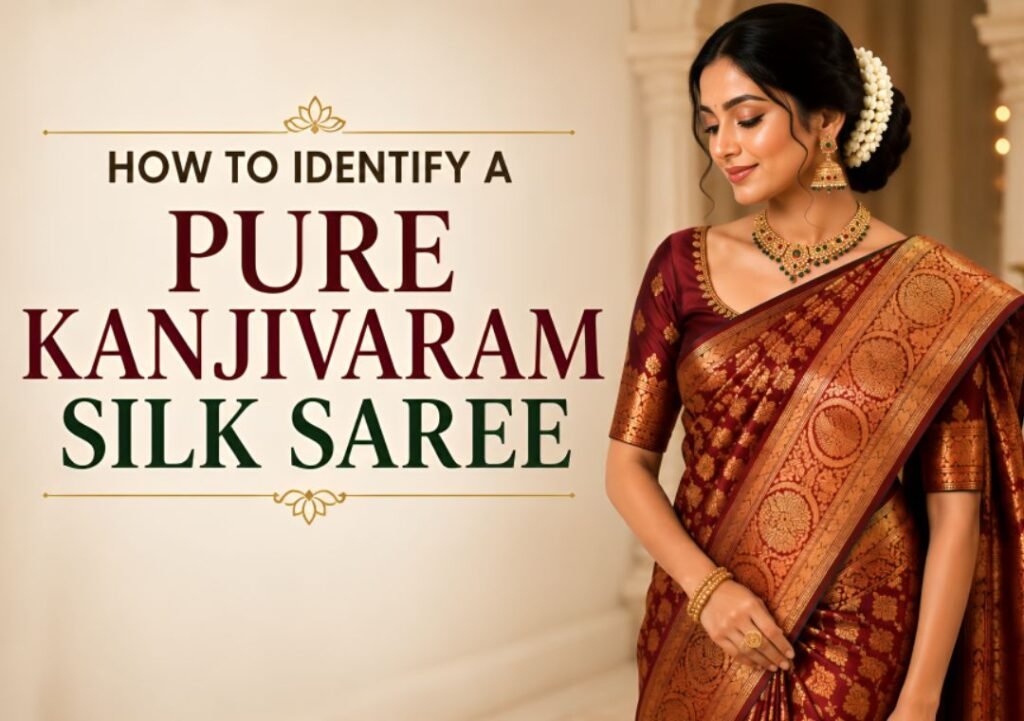
A Kanjivaram silk saree is one of the most luxurious and traditional sarees in India. Famous for its rich silk fabric, heavy zari work, and royal appearance, these sarees are mostly worn during weddings, festivals, and special occasions. Because of their popularity and high price, many duplicate sarees are also available in the market today.
That is why many buyers search for how to identify a pure Kanjivaram silk saree before purchasing one. Knowing the difference between original and fake sarees can help you invest in authentic quality and long-lasting fabric.
In this guide, we will explain simple ways to identify real Kanjivaram silk sarees.
Check the Silk Mark Certification
One of the easiest ways to identify an original Kanjivaram silk saree is checking the Silk Mark label.
The Silk Mark certification is issued by the Silk Mark Organisation of India and confirms that the saree is made from pure silk.
Always look for:
- Silk Mark tag
- Hologram sticker
- Unique certification code
Certified sarees are generally more trustworthy and authentic.
Observe the Fabric Shine and Texture
Pure Kanjivaram silk sarees have a unique natural shine that looks rich but not overly glossy.
Fake sarees often look too shiny because they are made from synthetic materials like art silk or polyester blends.
Original Kanjivaram silk feels:
- Soft yet slightly heavy
- Smooth in texture
- Rich and luxurious
- Durable when touched
The saree should not feel very slippery like synthetic fabric.
Check the Zari Work Carefully
Zari is one of the most important parts of a Kanjivaram saree. Pure zari work is traditionally made using silver threads coated with gold.
Simple Zari Test
Scratch the zari lightly from hidden area. If red silk threads appear inside, the zari may be pure. If white threads appear, it is usually fake or synthetic zari.
Real zari gives elegant appearance while fake zari often looks very bright and artificial.
Look at the Saree Border and Pallu
Authentic Kanjivaram sarees are known for their contrast borders and grand pallu designs.
In many original sarees:
- Border and saree body are woven separately
- Pallu is attached strongly with special weaving technique
- Designs appear detailed and sharp
The joints between border and body are usually very strong in pure Kanjivaram sarees.
Perform the Burn Test Carefully
This is an old traditional method used to identify pure silk fabric.
When pure silk thread is burned carefully:
- It smells like burnt hair
- Leaves black ash
- Stops burning quickly
Synthetic threads usually smell like plastic and melt while burning.
This test should only be done carefully on loose thread and preferably by experts.
Check the Weight of the Saree
Pure Kanjivaram silk sarees are usually heavier than normal sarees because of rich silk and zari weaving.
If a saree feels extremely light but claims to be heavy pure silk, there may be chances of mixed or artificial fabric.
Examine the Weaving Quality
Original Kanjivaram sarees are handwoven with detailed craftsmanship.
You may notice:
- Fine weaving patterns
- Clean finishing
- Intricate traditional motifs
- Strong fabric structure
Machine-made copies often lack detailed weaving quality and precision.
Price Can Also Indicate Authenticity
Pure Kanjivaram silk sarees are expensive because they use high-quality silk and skilled handloom weaving process.
If a saree is being sold at very cheap price while claiming to be pure Kanjivaram silk, you should verify authenticity properly before buying.
Good quality original sarees usually cost more because of craftsmanship and genuine material.
Buy from Trusted Sellers
Always purchase Kanjivaram sarees from trusted silk stores, certified sellers, or reputed handloom brands.
Reliable sellers usually provide:
- Authenticity certificates
- Proper billing
- Silk Mark tags
- Product details
This reduces chances of buying fake products.
Difference Between Pure and Fake Kanjivaram Saree
| Feature | Pure Kanjivaram Silk Saree | Fake Kanjivaram Saree |
| Fabric | Rich Pure Silk | Synthetic or mixed fabric |
| Shine | Soft natural shine | Very glossy artificial shine |
| Weight | Slightly heavy | Usually lightweight |
| Zari | Real zari threads | Artificial metallic threads |
| Price | Expensive | Comparatively cheaper |
Final Thoughts
Understanding how to identify a pure Kanjivaram silk saree can help you make better buying decisions and avoid fake products. Always check silk quality, zari work, weaving pattern, certification labels, and seller authenticity before purchasing.
A genuine Kanjivaram silk saree is not just an outfit, it is a timeless investment in traditional Indian craftsmanship and elegance.